What park model and mobile home moving actually covers
Kawartha RV Transport & Services moves park model trailers and single wide mobile homes across Ontario, and sets them up once they get there. The move itself is only half the job. The other half is site prep, blocking, levelling, plumbing and skirting, and that is the half that decides whether the unit sits right for the next ten years or starts pulling itself apart in the first season.
Most park models are wider than Ontario's 2.6 metre legal limit, so the move needs an oversize permit. We do not pull those permits ourselves. We bring in a contractor who does oversize work full time and handles all of it, permits and pilot vehicles included, while we stay on the job for the setup. We carry $2 million in liability, $150,000 in cargo coverage and $150,000 in non-owned trailer coverage, we run under Ontario CVOR 204-617-206, and we have moved roughly 1,800 trailers in the last five years.
A park model is not a big travel trailer, whatever it looks like sitting on the lot. It is heavier, it is wider, it is built to a different standard, and the road rules that apply to it are not the rules that apply to the trailer parked beside it. Once you understand that, the rest of this page makes sense.
People call us about these moves for three reasons. They have bought a unit and need it brought to their property. They are changing lots inside a seasonal park, or leaving one park for another. Or they already own the unit, it has been sitting somewhere for years, and it now has to come off that site because the park is closing, the lease is up or the land has been sold. All three jobs use the same equipment and the same rules. What changes is how much notice you have and how much setup you want at the far end.
Park model, mobile home or RV: which one do you actually have
This matters more than most owners expect, because the answer changes the permits, the equipment and the price. Canada builds these three things to three different standards, and the differences are not cosmetic.
A park model trailer is built to the CSA Z241 series. It keeps its own chassis, hitch and axles, and it is meant to be moved, just not often. CSA Group's own guidance on the Z241 series puts the floor area ceiling at 50 square metres, which is 538 square feet, and that figure includes any loft. That is why park models feel like small cottages inside and still travel down the highway on their own wheels.
A manufactured or mobile home is built to the CSA Z240 MH series, which covers the general requirements, the technical requirements and the factory installation of appliances across separate parts of the standard. These are built to be lived in year round and set on a permanent foundation. They are heavier, they are usually wider, and the setup at the far end is a bigger job than a park model.
An ordinary recreational vehicle is built to the CSA Z240 RV series, which the Canadian Recreational Vehicle Association confirms covers every RV built in Canada except park models. If that is what you have, you want our RV and trailer transport page instead. It is a simpler, cheaper job and there is no reason to pay park model prices for it.
| Unit | Standard | What that means for the move |
|---|---|---|
| Park model trailer | CSA Z241 series | Own chassis and axles. Up to 50 m2 (538 ft2) of floor area including loft. Usually over legal width, so usually a permit job. |
| Manufactured or mobile home | CSA Z240 MH series | Built for a permanent foundation and year round living. Heavier and wider. Single wides only for us. |
| Travel trailer, fifth wheel, toy hauler | CSA Z240 RV series | Normally inside legal width. No permit, no escorts, straight tow. See our transport page. |
We move single wides, not double wides
A double wide separates into halves. Each half is its own oversize load with its own permit and its own escorts, and then the two halves have to be married back together and sealed on the far end. That is a specialist trade. We will tell you honestly that it is not ours rather than take the booking and figure it out on your property.
Why 2.6 metres decides the whole move
Ontario sets the size a load can be before it needs anything special. Those numbers, from the province's guide to oversize and overweight vehicles and loads, are the frame everything else hangs on.
| Dimension | Legal maximum without a permit |
|---|---|
| Width | 2.6 metres |
| Height | 4.15 metres |
| Length, single vehicle | 12.5 metres |
| Length, combination | 23 metres |
Measure the widest point of your unit, not the floor. That means the eaves, the roof overhang, any bay window and anything bolted to the side that does not come off. A unit that is 12 feet at the floor can easily be over 13 feet at the roof line, and the roof line is what has to fit through the gap.
Once you are over 2.6 metres you need an oversize permit from the Ministry of Transportation before the unit moves. Ontario issues a few different kinds through its oversize and overweight permit service, including annual permits good for twelve months, project permits good for six, single trip permits good for seven days and permits for special vehicle configurations. For a one off park model move you are almost always looking at a single trip permit tied to a specific route on specific dates.
There is one more thing worth knowing if your unit is genuinely a used building rather than a trailer on axles. The Ministry issues a Letter of Clearance to move used buildings on the King's Highway, which is a separate process from a standard oversize permit. Whether your unit falls under that or under the ordinary permit depends on how it is built and how it is being moved. The contractor who handles the permit side works that out before anything is booked.
Permits, escorts, flags and signs
An oversize permit is not just a piece of paper that says you are allowed to be wide. It comes with conditions attached, and those conditions are what actually shape the day: what time you can move, which roads you can use, how many vehicles have to travel with you and what the load has to be wearing.
Escorts
Ontario ties escort requirements to width and to the kind of road you are on. Loads from 2.61 to 3.99 metres wide generally travel without an escort. From 4.0 to 4.99 metres, a multi lane highway calls for one escort, a two lane road from 4.0 to 4.59 metres calls for one, and a two lane road from 4.6 to 4.99 metres calls for two. That is why a difference of a few inches in the width of your unit can change the cost of the move noticeably. It is also why we ask you to measure before we quote.
Flags and signage
Oversize loads have to be marked. Flags must be bright red or orange and not less than 40 centimetres square. The OVERSIZE LOAD sign has to carry black letters at least 200 millimetres high on a yellow background and be visible from 150 metres. None of this is optional, and none of it is a formality. It is what stops the car behind you from misjudging how far your load sticks out.
When you are allowed to travel
Night travel for oversize loads is restricted to units up to 3.05 metres wide and 25 metres long, and only on multi lane controlled access highways. On a statutory holiday, movement is permitted from half an hour before sunrise until noon. In the Greater Toronto Area there are commuter restrictions, roughly 7:00 to 9:30 in the morning inbound and 3:30 to 6:30 in the afternoon outbound. Put all of that together and most park model moves end up leaving mid morning on an ordinary weekday, which is exactly what we plan for.
Why we go into this much detail
Because the single most common reason a move gets delayed is that nobody measured the unit properly and the permit that was pulled does not match what is sitting on the lot. Five minutes with a tape measure at the widest point saves a wasted trip and a second permit fee.
What we sub out, and why we tell you so
We do not provide oversize services directly. When a load is over legal size, we bring in a contractor who does that work full time, and they handle all of it: the permit, the routing, the pilot vehicles, the timing windows. You still book with us, you still call us, and you still get one price and one point of contact.
We could be quieter about that and most customers would never know. We would rather you knew. The people who do oversize work every week are better at it than we would be doing it occasionally, and the whole point of hiring a mover is that the person doing each part of the job actually knows that part. What we are good at is everything that happens once the unit is off the road and onto your site, and that is where we stay.
Site prep, blocking and skirting
A park model that is set down badly will tell you about it for years. Doors that will not latch. A window that binds in one corner. A floor with a soft spot that was not there last summer. Almost all of it traces back to a unit that was never properly supported in the first place.
Site prep
Before a unit arrives, the pad it is going to sit on needs to be right. That means ground that is reasonably level to start with, firm enough that blocks are not going to sink into it, and drainage that runs away from where the unit will sit rather than under it. We do site prep as part of the job, and on a site we have never seen we would far rather look at it before the move date than on it.
Blocking
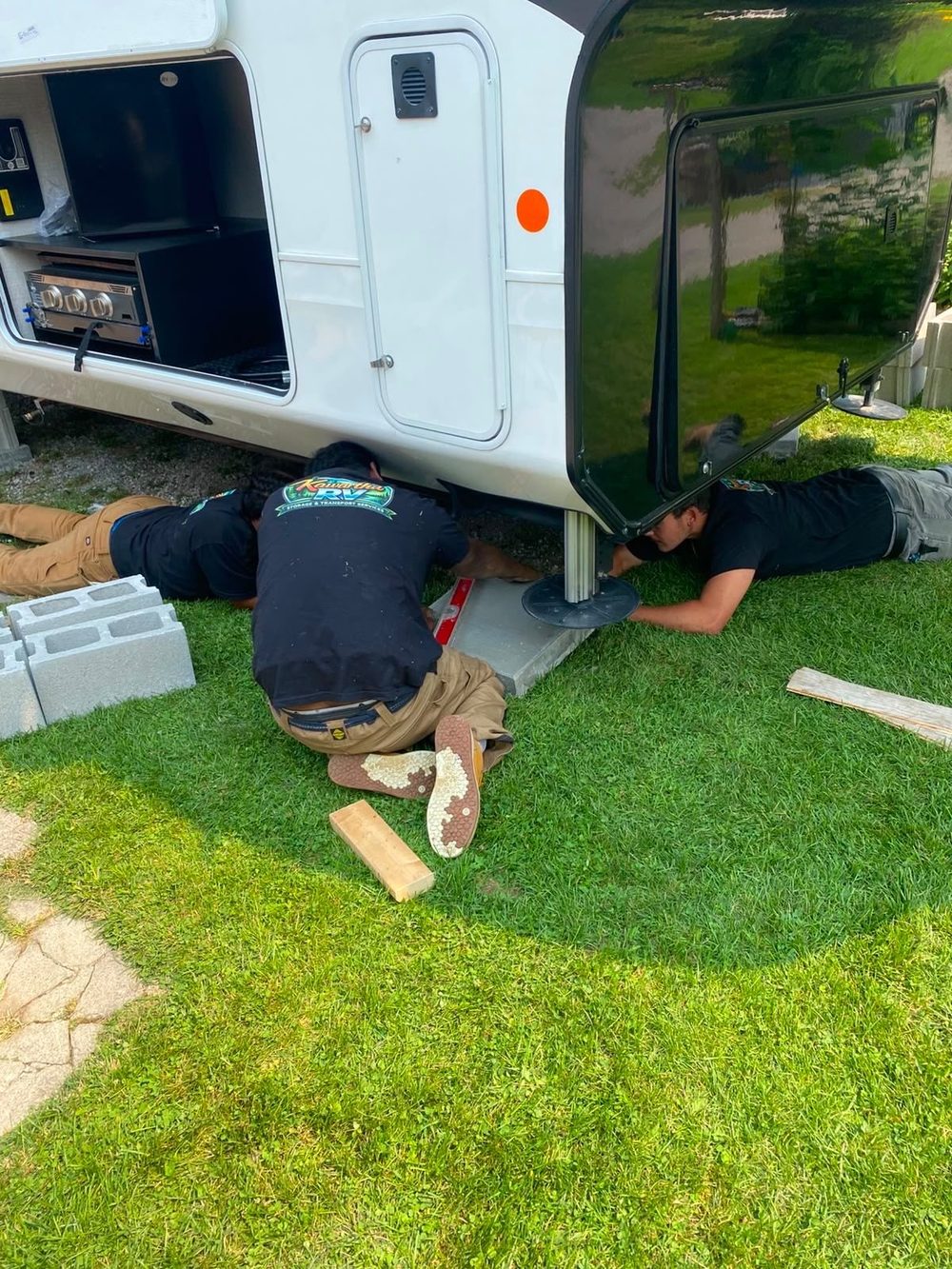
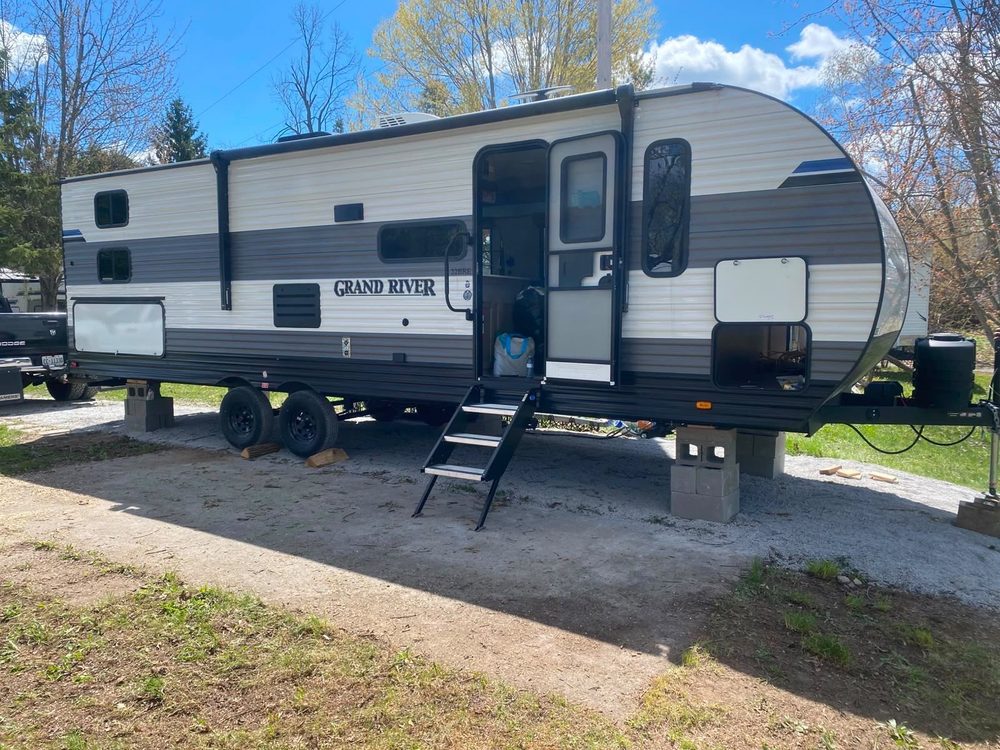
Blocking is the stack of supports that carries the weight of the unit and transfers it into the ground. It goes under the frame at the points the frame is designed to be carried at, not wherever there happens to be a flat spot. We supply the materials, so you are not sourcing pads and shims the night before we arrive.
Done properly, blocking spreads the load, keeps the frame straight and stops the unit from twisting. Done badly, it concentrates the whole weight of the unit on a few points and slowly bends the thing you paid for. There is no visible difference between the two on day one. There is an obvious difference by year three.
Skirting
Skirting closes in the gap between the bottom of the unit and the ground. It keeps wind out from underneath, keeps animals from setting up house under your floor, and makes a real difference to how the unit holds heat in shoulder season. It also finishes the look, which matters if you are going to sit and look at it every weekend for a decade. We install skirting as part of the setup.
Plumbing, levelling and getting it liveable
Plumbing and levelling go together, and we do them together on purpose. A unit that is out of level does not just feel odd. Drains rely on gravity and a consistent fall, so a unit sitting low at the wrong end will hold water in lines that were designed to empty themselves. Traps do not seal the way they should. In a park model that sits outside through an Ontario winter, water that does not drain is water that freezes, and water that freezes splits fittings.
So the sequence is: block it, level it, then connect the water and the drains, then check the level again once it has settled onto the blocks under its own weight. Doing the plumbing first and levelling afterwards means you have just put strain on every joint you made.
The same logic applies to everything else in the unit that depends on being square. Slide-outs are built to run in a frame that is true. Doors are hung to a frame that is not twisted. If you want the whole story on that side of the work, our levelling and blocking page goes into it in detail, including the flat rate pricing.
Re-levelling a unit that is already on site
You do not need us to have moved it. Re-levelling existing setups is a service on its own, and it is one of the more common calls we get, especially in spring.
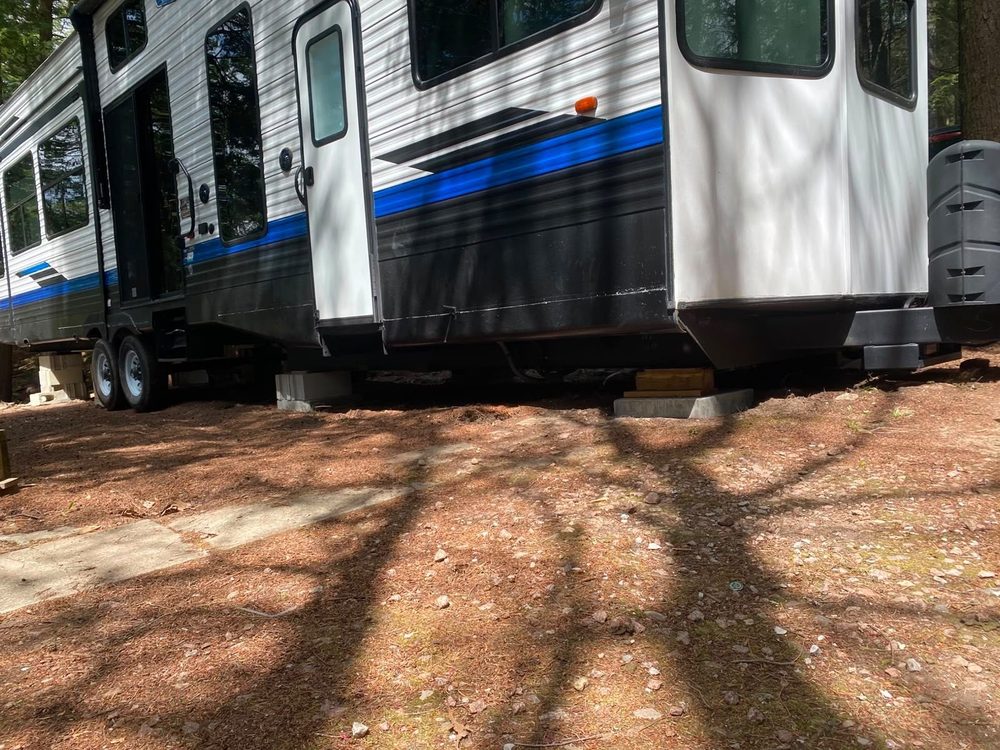
Units move. The ground under a seasonal site is not a foundation, and it is not pretending to be one. It freezes, it heaves, it thaws, it settles, and it does not do any of that evenly. A unit that was dead level in October can be visibly out by May, and the owner usually notices it as a door that has started to stick rather than as a levelling problem.
The tell tale signs are worth knowing. A door that catches on the latch or swings open on its own. A window that binds in one corner. Cabinet doors that will not stay shut. A slide-out that has started to sound different or drag on one side. Any of those is worth a look before it turns into a frame problem, because the frame is the expensive part.
Re-levelling is straightforward work when it is caught early. We come out, check it properly with a level and a string line rather than by eye, adjust the blocking and put it back where it should be. Caught late, after the frame has been sitting twisted for a few seasons, it is a different conversation and sometimes the damage does not fully come back out.
Tight, wooded and remote sites
Most of the interesting work in this trade is not on the highway. It is the last hundred metres.
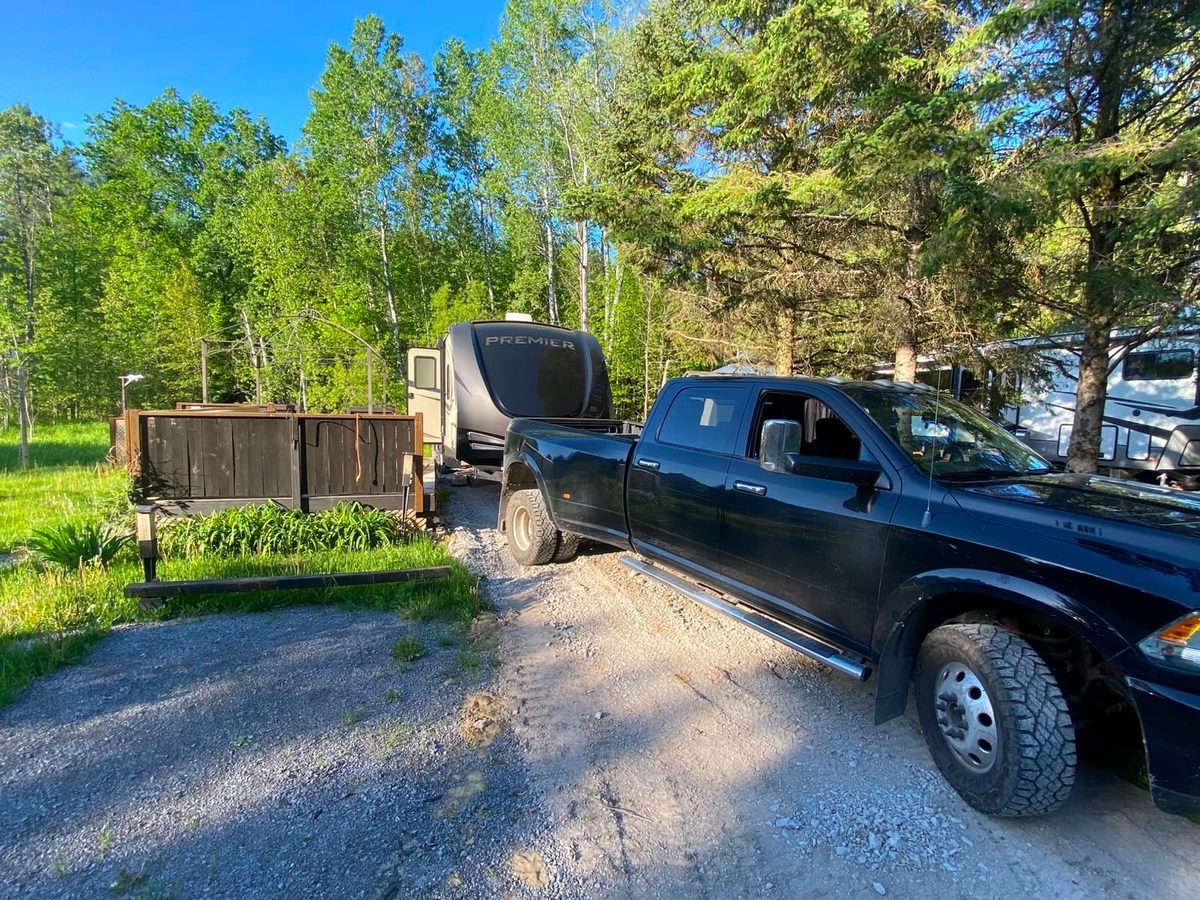
Seasonal parks in the Kawarthas were laid out when units were smaller, and the trees that were saplings when the lot was cut are now mature. Cottage roads narrow, then narrow again, then turn. Sites back onto water on one side and a neighbour's deck on the other. Ground that carried a truck fine in August turns soft after a wet week in October. None of that shows up on a map.
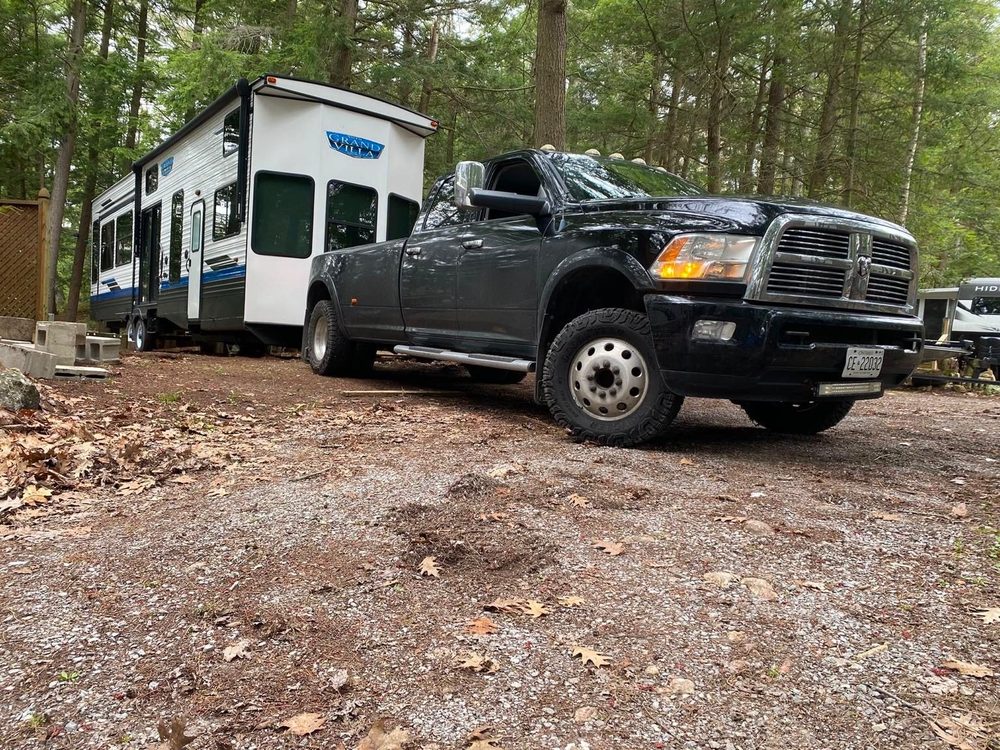
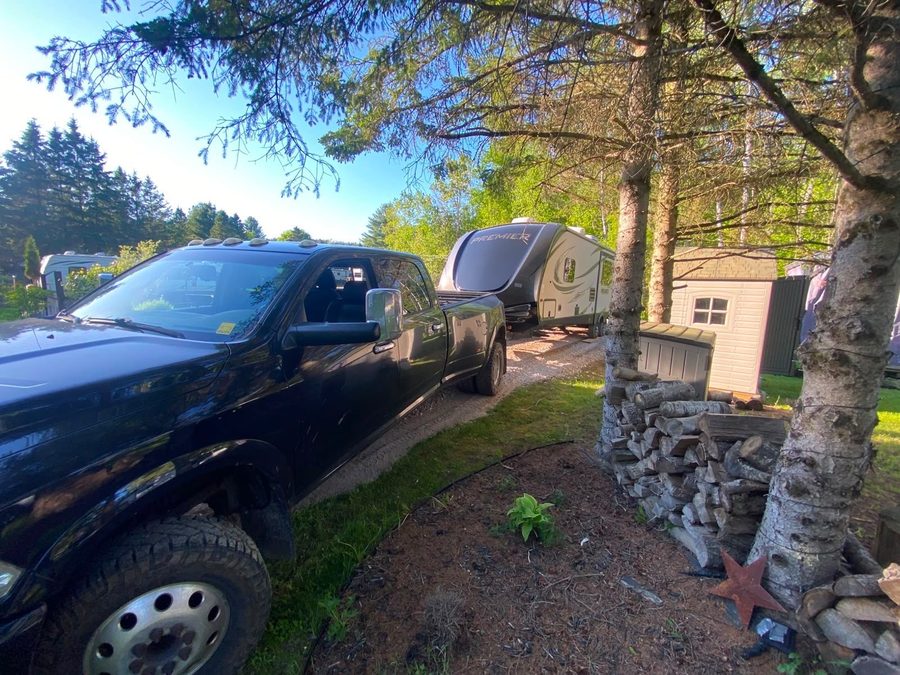
Tight and awkward sites are what we specialise in. Wooded lots, remote properties, soft ground, blind approaches and the moves that other people have already looked at and passed on. We have machinery available on request when a site genuinely needs it, and we have three one-ton dually trucks and a 30 foot gooseneck trailer to work with.
What we ask is simple: send photos of the approach when you ask for a quote. The lane, the gate, the turn at the end, the trees on both sides, and where the unit has to end up. From that we can usually tell you straight away whether it can be done, whether it can be done with a bit of clearing, or whether something has to move first. Finding that out from a photo costs nothing. Finding it out with a truck in your laneway costs a day.
Seasonal parks, resorts and lot changes
A lot of what we move never leaves the park it is in. People upgrade to a better lot, move closer to the water, move away from the road, or get told the park is reorganising and their site is going. Those moves are short in distance and every bit as technical as a long haul, sometimes more so, because you are working inside a laid out park with neighbours' units on both sides and no room to swing.
They are also usually time boxed. Parks tend to want this work done at opening or at close, and everyone in the park wants it done the same week. If your park has told you a date, tell us as early as you can. Spring and fall are the two busiest stretches of our year and the calendar fills from the outside in.
The other common version is the end of a park's life. When a seasonal park closes or a lease ends, every owner on that property needs their unit off by a fixed date. If that is your situation, get in the queue early. The people who call in the first week get their pick of dates. The people who call in the last week are calling everyone.
What you need to do before we arrive
None of this is complicated, and all of it saves you money, because a crew standing around waiting for something to be sorted out is a crew you are paying for.
- Have the unit unblocked. If it is sitting on blocking and the blocking has not been touched in years, it needs to come out before the unit can go anywhere.
- Move anything in the way. Decks, sheds, skirting, fire pits, planters, the wood pile, the thing that has been beside the trailer so long you stopped seeing it.
- Check the tires. They need to hold air and they must not be cracked. Tires that have sat under weight on one spot for five seasons often have sidewall cracking you will not see until you are looking for it.
- Disconnect services. Water, power, sewer and propane all need to be off and disconnected before the unit moves.
- Secure the inside. Anything loose on a counter or a shelf will be on the floor when it arrives. Cupboard doors and drawers should be latched or taped.
- Know where it is going. Have the far end decided and accessible, and tell us if the ground there has never had a unit on it before.
If you would rather not deal with any of that, say so when you book. We can do it for an additional charge, and for a lot of people that is the right answer. It is a bad trade to spend a Saturday under a trailer with a floor jack to save a small line on an invoice.
Mistakes that cost people real money
We see the same handful of things over and over, and every one of them is avoidable.
Not levelling properly
This is the big one, by a distance. A unit that sits out of level puts a constant twist through the frame. That twist works its way into the doors, the windows, the slide-outs and the plumbing, and by the time it is obvious it is no longer cheap. Safety is the first reason to get it right. Money is the second, and it is not a small second.
Towing with a vehicle that is not rated for it
People move their own units to save the cost of a mover, using a truck that is rated for less than what is behind it. A park model is heavier than it looks and it does not behave like a travel trailer. An underrated tow vehicle does not fail gradually. It fails at the worst moment, usually going downhill or in a crosswind, and what happens next involves other people's cars.
Skipping the safety steps
Chains, lights, brakes, tire condition, load security, flags and signage where they are required. Every one of them is boring right up until the moment it is the only thing standing between a normal day and a very bad one. Safety is our number one. We will hold up a job over something that looks minor, and we would rather have that conversation with you than the other one.
Measuring the floor instead of the widest point
Covered above, and worth repeating, because it is the mistake that most often derails a booked date. The eaves are what has to fit through the gap, not the floor.
Leaving it too late
Spring and fall are busy. Permits take time. If your park has given you a date, the day you find out is the day to call.
What a move costs and how we price it
We are not going to put a single number on this page and pretend it applies to your unit, because it would not. What we can do is tell you exactly what moves the price, so you can see where your job is going to land.
| What changes the price | Why |
|---|---|
| Distance | Priced per kilometre or per job, whichever is fairer for the trip. Local tows start at $400 within 45 kilometres of our base. |
| Width of the unit | Decides whether a permit is needed at all, and whether escorts are required. This is usually the single biggest swing. |
| Access at both ends | A straight pull onto a gravel pad and a threaded reverse between mature trees are not the same job. |
| Setup on the far end | Levelling and blocking starts at $799 as a local flat rate. Plumbing, skirting and site prep are quoted with it. |
| Prep work | If you want us to unblock the unit, move a deck or shed or deal with skirting, that is an additional charge. |
| Timing | Rush and emergency work costs more than work booked with reasonable notice, for the obvious reason. |
There is no deposit. You pay when the job is finished, by cash, credit card, debit or e-transfer. Quotes are free, and we would rather spend fifteen minutes on the phone getting the details right than give you a number that changes later. If you want to see how we think about pricing generally, our guide to what RV transport costs in Ontario lays it out.
Booking, and how a job actually runs
Straightforward work usually needs 24 to 48 hours of notice. An oversize move needs longer, because the permit and any escorts have to be arranged first and those are not same day items. Same day and emergency work is available when we can fit it, so if something has gone wrong, call and ask rather than assuming.
When you get in touch, the more of this you have ready, the faster we can price it:
- Make, model and year of the unit if you have it, and the width at the widest point
- Where it is now and where it is going, with postal codes if you have them
- Photos of the unit, the approach at the pickup end and the approach at the drop end
- Whether it is currently blocked, and whether anything is in the way
- What setup you want at the far end: levelling and blocking, plumbing, skirting, site prep
- Your dates, and whether they are fixed or flexible
From there we give you a straight price. On the day, we show up when we said we would, do the move, do the setup, and walk it with you before we leave. We are reachable at (647) 961-9257 or transport@kawartharvrentals.ca. Our hours are monday to Saturday, 7:00am to 7:00pm. Sunday closed, by appointment only.
Our 30 day guarantee, and what it does not cover
The guarantee, in plain words
If a unit we set up shifts or moves because of our workmanship, we come back and redo the job at no charge. Weather and ground conditions are outside that, and we say so up front.
We are specific about this because a guarantee that quietly covers nothing is worse than no guarantee at all. What we control is the workmanship: how the unit is blocked, how it is levelled, how the plumbing is connected, how the skirting is fitted. If any of that is the reason a unit shifts or moves within 30 days, we come back and redo the job at no charge to you.
What we do not control is the ground and the weather. A seasonal site is not a frost depth foundation and was never built to be one. Ground freezes, heaves, thaws and settles, and it does not do it evenly across a pad. Heavy rain changes what the soil under a block will carry. No installer in Ontario can guarantee a unit against that, and the ones who imply they can are either not thinking about it or hoping you will not.
The practical answer to ground movement is not a guarantee. It is checking the unit each spring and re-levelling it when it needs it, which is a small job caught early and an expensive one caught late. That is exactly why we offer re-levelling on units we never moved as a service on its own.
Where we do this work
We are based in Beaverton, Ontario, which puts us in the middle of the Kawarthas, Durham Region, Simcoe County and the run north into Muskoka. We try to keep the work in Ontario because that is where nearly all of it is, but we will go coast to coast for the right job, and there is no part of the province we refuse to go to.
If your town is not on that list, it does not mean we will not come. It means we have not put a page together for it yet. Our service areas page has the full picture, or just call and ask.